Massive Microalgae Bloom Paralyzes Israel’s Desalination Network
Newsroom · 4 Sept 2026 · 6 views
Massive Microalgae Bloom Paralyzes Israel’s Desalination Network
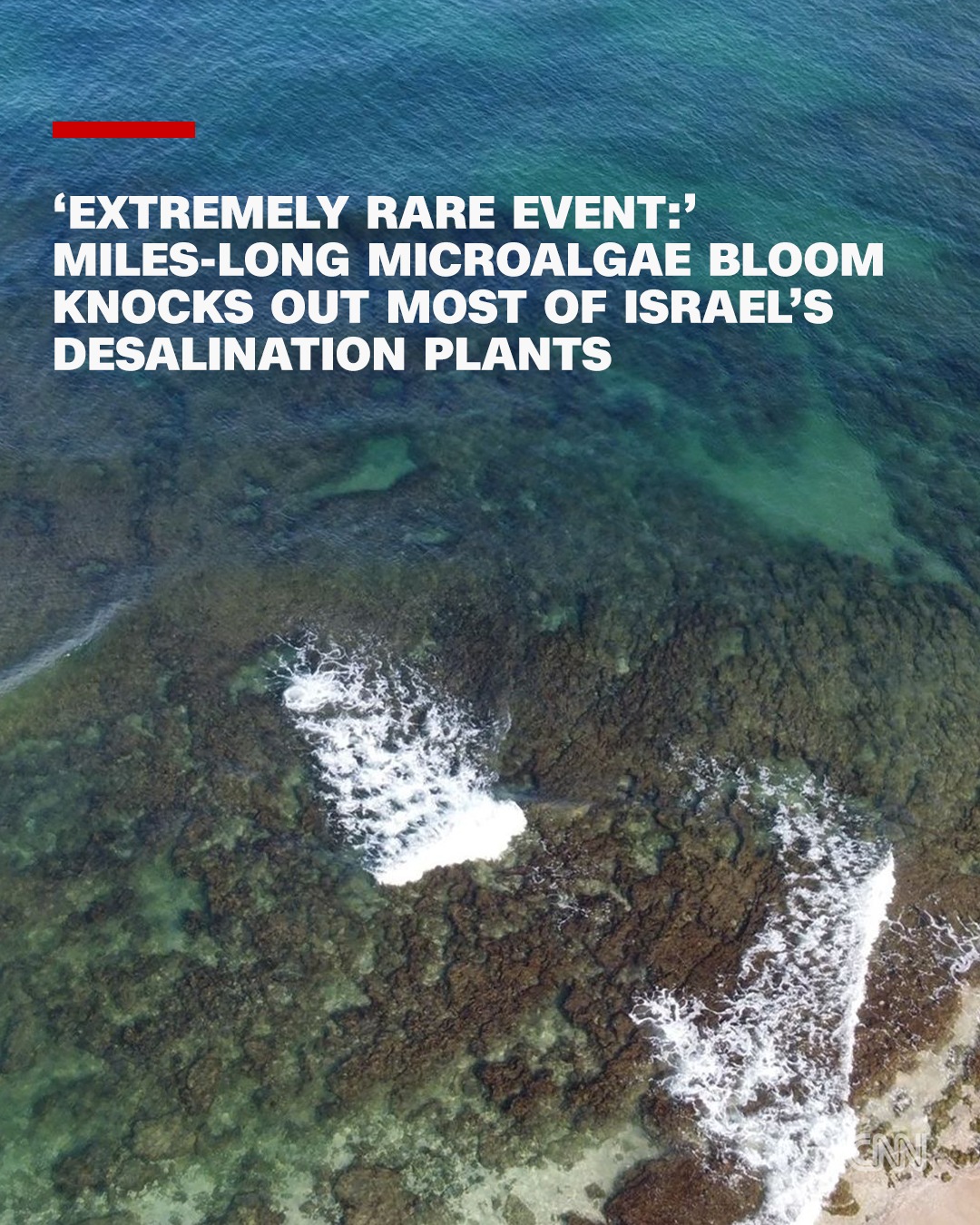
A miles-long microalgae bloom in the Mediterranean Sea has temporarily knocked offline many of Israel’s major desalination plants, presenting a severe threat to the arid nation's primary source of drinking water. — TEL AVIV, Israel, Sept. 4, 2026
In details made available to Shemnews this week, Lior Gutman, a spokesperson for Israel's national water company Mekorot, described the disruption as an "extremely rare event." Five of the country’s six coastal desalination plants, which supply at least 65% of Israel's drinking water, were forced to shut down on Sunday after the rapidly multiplying microalgae fouled the delicate reverse-osmosis membranes used to filter out salt and contaminants. While some facilities have partially resumed operations, only one was running at full capacity by Thursday. “An event of this kind has never occurred before in Israel,” Gutman emphasized, though he noted that the government has stepped in by pumping water from the Sea of Galilee and tapping national reserves to prevent widespread drinking water shortages.
The crisis occurred at the peak of summer when water demand is at its highest, triggering local restrictions on garden irrigation and swimming pools, while heavily impacting farmers who rely on high-quality drinking water for their crops.
Experts studying the crisis have highlighted several key vulnerabilities exposed by this environmental anomaly:
* The Algae Threat: The microalgae bloom stretching over a dozen miles is believed to have originated in the Nile Delta before riding sea currents up the Israeli coast. Edo Bar-Zeev, a water research professor at Ben-Gurion University, noted that while jellyfish and localized algae have caused closures before, a disruption across such a massive portion of the coastline is unprecedented.
* Climate Drivers: Mekorot reported that a highly unusual combination of environmental factors fueled the bloom, including a sea storm that increased water turbidity and pushed Mediterranean sea temperatures above 86 degrees Fahrenheit (30 degrees Celsius). Scientists warn that as global warming alters ocean currents and triggers more intense storms, these severe blooms will become more frequent.
* Wider Security Risks: Michael Christopher Low, director of the Middle East Center at the University of Utah, noted that the event has sparked alarm over the region's heavy reliance on a centralized technological solution.
Beyond climate-driven disruptions, experts warn that desalination infrastructure is highly vulnerable to military strikes, cyberattacks, and potentially devastating offshore oil spills, which could paralyze plants for extended periods.
While Israel is moving aggressively to clear the current disruption, Bar-Zeev warned that the country must adapt to a changing ocean.
“It’s a fair estimation that this will not be a once-in-a-lifetime kind of event… you can assume that this will occur more and more through climate change,” he said. By Laura Paddison | Shemnews
More stories